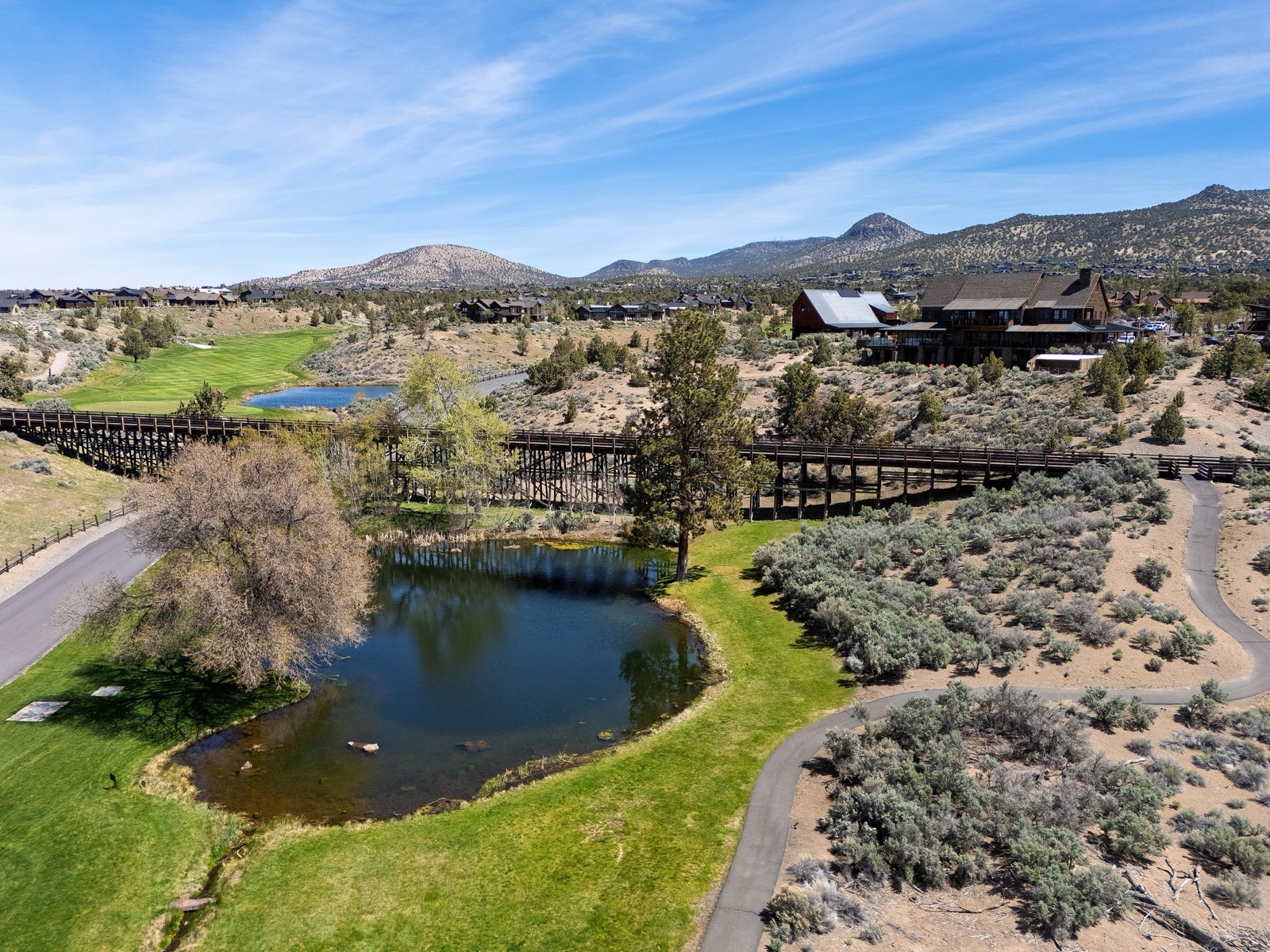
Crooked River Ranch is roughly 12,000 rural acres near Terrebonne, not a resort: wells, septic, a public golf course, and an HOA that runs the roads.
Browse Crooked River Ranch homes for sale.
Crooked River Ranch is not a resort. It's a large rural planned community on the canyon rim above the Crooked and Deschutes rivers near Terrebonne, split across northern Deschutes and southern Jefferson counties. There's a golf course and a ranch-wide homeowners association, but the acreage lots, the wells and septic systems, and the high desert setting make this a different kind of buy than a gated golf community closer to Bend. Every fact below traces to the Crooked River Ranch Club and Maintenance Association, the Crooked River Ranch Fire & Rescue district, the Crooked River Ranch Water Company, Jefferson County's own permitting pages, or our own MLS database. If you want to see the Crooked River Ranch community page and what's listed there right now, start there and use this guide alongside it.
What do the dues at Crooked River Ranch actually pay for?
Every property at Crooked River Ranch belongs to the Crooked River Ranch Club and Maintenance Association, and every owner pays into it. Across the 13 current listings in our MLS database that report an association fee, the median works out to $48 a month, $576 a year. That figure moves around by lot, so confirm the actual assessment on any specific property before you write an offer.
What the assessment funds, alongside the Ranch's Special Road District, is real physical infrastructure: a swimming pool, tennis and pickleball courts, a baseball field, a basketball court, a horse arena, a disc golf course, and two community parks, MacPherson Park and Panorama Park, each with a pavilion. It also funds a Road Department that maintains the Ranch's own network of roads, separate from the county roads that also cross the property. This isn't a gated community with a concierge desk. It's an association that runs the physical infrastructure of an unincorporated community that never became a city.
What does the Club and Maintenance Association actually run?
The Association is organized as a nonprofit corporation, governed by an elected Board of Directors, and it functions like local government for everything the counties don't handle directly. Standing committees cover architectural review, meaning new construction and remodels get checked against the Ranch's CC&Rs before you break ground, plus CC&R enforcement and the roads. The administration office sits at 5195 SW Clubhouse Road in Terrebonne, next to the golf clubhouse, and that's the first stop for CC&R questions, architectural review applications, and assessment questions. Read the Association's own page before you assume anything about what a lot allows.
What is the golf course like?
The golf course anchors the Ranch physically and socially. It's an 18-hole, par-71 public course carved into high desert terrain, with the Crooked River Canyon cutting straight through the layout. The signature hole is No. 5, a tee shot across the canyon that the club's own site calls one of the most spectacular holes in golf. The clubhouse runs a pro shop, a restaurant, and men's and women's clubs, and the property also carries an RV park and cabins for stay-and-play visitors. If golf is part of why you're looking here, play a round before you make an offer. The course is public, so you don't need to own a home on the Ranch to try it first.
How do water, septic, and other utilities work out here?
Crooked River Ranch runs its own water utility, the Crooked River Ranch Water Company, a system regulated by the Oregon Public Utility Commission and the Oregon Health Authority's drinking water program. It serves more than 1,500 homes and commercial properties from a mix of production wells, including one drilled 1,100 feet deep, a cistern, and a one-million-gallon elevated storage tank, all tied together through a SCADA control system installed to fix long-standing low-pressure problems. Not every lot connects to that system. Some outlying parcels rely on a private well instead, which is normal for a rural subdivision this size.
There is no ranch-wide sewer. Every home runs its own on-site septic system, permitted and inspected under Jefferson County's On-Site Septic Program, with the small portion of the Ranch that sits in Deschutes County following that county's own equivalent process. Electricity comes from Pacific Power. If you're used to municipal water and sewer, budget time to understand well and septic maintenance, and ask any seller for septic inspection and pump records before you close. You can read more about the water company's own regulatory setup directly.
What does fire protection look like in high desert country?
Crooked River Ranch Fire & Rescue is its own special district, formed in 1977 after residents petitioned for it. Before that, the Ranch had no local fire or EMS coverage at all. Today it runs as a combination department, with a Fire Chief and shift Captain and Firefighter Paramedics on the career side, plus volunteer Lieutenants and firefighters, many of them also certified paramedics or EMTs. That structure matters here because this is high desert terrain, with sagebrush and juniper right up against a lot of backyards, and wildfire is a real planning factor rather than an abstract one. Ask about defensible space and the roofing and vent materials on any home you're considering, the same way you would anywhere in Central Oregon's wildland urban interface. You can read the district's own history and staffing on its site.
What happens to the roads when winter hits?
The Ranch's road network, close to 90 miles of it, splits into roughly a dozen miles of county road and the rest Association and Special Road District roads. Because the Ranch sits at close to 2,800 feet, winter brings real snow and ice, and because so much of the system is locally maintained rather than run by a county, plowing priority and timing depend on the Road Department and Special Road District's own schedule, not on Deschutes or Jefferson County's plow routes. Residents have organized their own supplemental help in hard winters too. In 2025, a local volunteer group that also does other work on the Ranch cited snow removal for medical patients as one of the things it pitches in on. If a reliable route out in a storm matters to you, ask which road actually serves your specific lot and who plows it.
Is Crooked River Ranch a full-time neighborhood or a second-home community?
The 2020 Census counted 4,912 residents at Crooked River Ranch, spread across more than 2,600 privately owned lots on roughly 12,000 acres, most parcels running from about one to more than five acres. That gap between lot count and year-round population says something on its own. Not every parcel holds a full-time household. The same census recorded a median resident age of 57.6, with more than a third of residents 65 or older, a pattern that fits a mix of retirees and second-home owners more than a young-family suburb. It doesn't mean it's exclusively either. Plenty of households live here year-round and commute into Redmond or Bend, and plenty of lots sit as recreational or future-build property. Figure out which kind of buyer you are before you shop, because it changes what you should ask about winter access, water service, and how active a specific lot has actually been.
Can you rent out a home on the Ranch?
If you're picturing Crooked River Ranch as a short-term rental play, slow down and read the CC&Rs on the specific lot first. The Association's CC&R Committee reviews complaints and enforcement under the Ranch's covenants and meets monthly at the Clubhouse Road office. We did not find a published, ranch-wide short-term rental ban or a published blanket allowance, so the honest answer is that it depends on your specific lot's covenants and on whatever the Board has adopted most recently. That's a question for the Association office directly, not a guess from us or from any other site. What the Ranch does run itself is short-term lodging at the golf course, cabins and stay-and-play packages booked through the pro shop, alongside an RV park. That's ranch-run visitor lodging, not a private homeowner renting out a house, and it doesn't answer what your own CC&Rs allow.
How far is it to Redmond, Bend, and the airport?
Crooked River Ranch sits roughly 12 to 14 miles by car from Redmond, about a 20-to-25-minute drive up Highway 97, and roughly 30 miles from downtown Bend, somewhere around 40 to 50 minutes non-stop depending on the route and traffic. Redmond Municipal Airport, the airport that handles commercial flights for Central Oregon, sits in that same close range from the Ranch as Redmond itself. Terrebonne, where the Ranch's mail is addressed and where the closest grocery store and post office sit, is a much shorter hop for most of the Ranch. None of that is a quick daily commute if your job sits in downtown Bend, but it's a realistic distance if you work in Redmond, or if your household only needs to make the Bend drive occasionally.
When were most of the homes built?
Homes at Crooked River Ranch mostly went up over a long build-out window rather than one development push. In the current membership read of the Ranch's detached housing stock, 341 homes fall between build years 1978 and 2006, a span of nearly three decades. That means the housing stock ranges from late-1970s construction to homes built in the mid-2000s, roughly 20 to 48 years old as of today, and the systems in an older home, the well, the septic, the roof, the wiring, deserve inspection scrutiny that matches that actual age, no matter how well-kept a house looks from the driveway.
What does buying a rural lot at Crooked River Ranch actually involve?
Buying here is closer to buying acreage than buying a subdivision lot in town, and the process reflects that. Because the Ranch straddles two counties, your specific parcel falls under either Jefferson County or Deschutes County land use and building rules, not both, so confirm which county governs your lot before you assume anything about permits. If the lot needs a new septic system, Jefferson County's On-Site Septic Program requires a land use approval first, then a soil evaluation using open test pits dug on the actual site, and only then a permit to construct a system that meets Oregon DEQ standards. Water is the other variable. Some lots tie into the Crooked River Ranch Water Company, others rely on a private well, and you should confirm which one applies to the specific parcel, not the neighborhood in general, before you write an offer. Every build or remodel also goes through the Association's architectural review process against the Ranch's CC&Rs, on top of whatever the county requires. None of this is unusual for rural Central Oregon. It's just different from what a buyer moving from a city subdivision expects, and it's worth walking through with someone who knows the Ranch before you get attached to a specific lot.
Questions
Is Crooked River Ranch a resort community?
No. It has a public golf course and a homeowners association, but it isn't run or marketed as a resort. It's a large rural planned community with acreage lots, wells and septic, and a ranch-wide association that functions like local government for what the counties don't cover.
How much are the HOA dues at Crooked River Ranch?
Across the 13 current listings in our MLS database that report an association fee, the median is $48 a month, $576 a year. Confirm the actual dues on any specific listing before you rely on that median, since it moves by lot.
Do homes at Crooked River Ranch have city water and sewer?
Most connect to the Crooked River Ranch Water Company, a system regulated by the Oregon Public Utility Commission and the Oregon Health Authority. Some outlying lots run on a private well instead. There is no public sewer anywhere on the Ranch. Every home uses its own on-site septic system.
How far is Crooked River Ranch from Redmond and Bend?
Roughly 12 to 14 miles and 20 to 25 minutes to Redmond, and roughly 30 miles and 40 to 50 minutes to downtown Bend, depending on route and traffic. Redmond Municipal Airport sits in that same close range from the Ranch.
When were most of the homes built?
In the current membership read of the detached housing stock, 341 homes fall between 1978 and 2006 build years, so the Ranch grew steadily over nearly three decades rather than all at once.
Is Crooked River Ranch full-time or mostly second homes?
Both. The 2020 Census counted 4,912 residents against more than 2,600 privately owned lots, with a median resident age of 57.6, which points to a mix of full-time residents, retirees, and second-home owners rather than one dominant pattern.
Where do the numbers in this guide come from?
The HOA figure and the build-year range come from our own MLS database, read September 9, 2026: the association-fee field across the 13 current listings that report one, and build years across the 341 homes in the current membership read. Homes for sale, closed sales, and sale prices are withheld here because there isn't a publishable number at any grain right now, and we don't estimate or round-fill a figure we can't verify. Every other fact in this guide, the golf course, the fire district, the water company, the county permitting process, traces to that organization's own page, several of them linked above.
Next step
Ready to see what's actually out there? Browse the Crooked River Ranch community page for current listings, or talk to our team about a specific lot, its well and septic setup, and which county governs your parcel before you write an offer.