




Every January, communities across the country conduct a Point-in-Time count of people experiencing homelessness. The count is an imperfect tool, a single-night snapshot that undercounts the actual population, but it provides the best comparable data available for tracking trends. In January 2025, Central Oregon’s count found 2,108 people experiencing homelessness, both sheltered and unsheltered, across Bend, Redmond, Sisters, La Pine, Madras, Prineville, and Warm Springs. That represents a 17% increase from 1,799 in 2024 and a 28% increase from 1,647 in 2023.
The Numbers in Context
Point-in-Time counts are conducted on a single night in late January, one of the coldest times of year. Volunteers and service providers canvas shelters, streets, camps, and other locations where people are sleeping. The methodology inherently undercounts because it misses people in hidden locations, people who are temporarily staying with others (couch surfing), and people who avoid being counted.
With that caveat, the trend is clear: homelessness in Central Oregon is increasing. The year-over-year numbers:
- 2023: 1,647 people
- 2024: 1,799 people (9.2% increase)
- 2025: 2,108 people (17.2% increase)
The acceleration is notable. The rate of increase is growing, not stabilizing, which suggests that the factors driving homelessness are intensifying faster than the responses addressing it.
Who Is Counted
The count covers the entire Central Oregon region: Deschutes County (including Bend, Redmond, Sisters, La Pine, and Sunriver), Crook County (Prineville), Jefferson County (Madras), and the Warm Springs Reservation. Bend and Redmond account for the largest shares, consistent with their larger populations, but homelessness exists across all communities in the region.
The population experiencing homelessness is diverse. It includes individuals and families, veterans, people with disabilities, people fleeing domestic violence, people with substance use disorders, and people who simply can’t afford housing. The common thread is not personal failure; it’s a gap between housing costs and income.
The Housing Connection
The correlation between housing costs and homelessness is well-documented nationally and is clearly evident in Central Oregon. As housing prices in the region have risen sharply over the past five years, the number of people falling out of housed stability has increased accordingly.
Consider the math: median rent for a one-bedroom apartment in Bend is approximately $1,400 to $1,600 per month. To afford that rent without spending more than 30% of income on housing (the standard affordability threshold), a household needs to earn at least $56,000 to $64,000 annually. Many jobs in Bend’s service-oriented economy pay significantly less than that. When housing costs exceed income, people are one car repair, one medical bill, or one job loss away from losing their housing.
This is not a political statement; it’s arithmetic. The solution to homelessness is overwhelmingly housing, and the barrier to housing is overwhelmingly cost.
What Is Being Done
Central Oregon communities are implementing a range of responses:
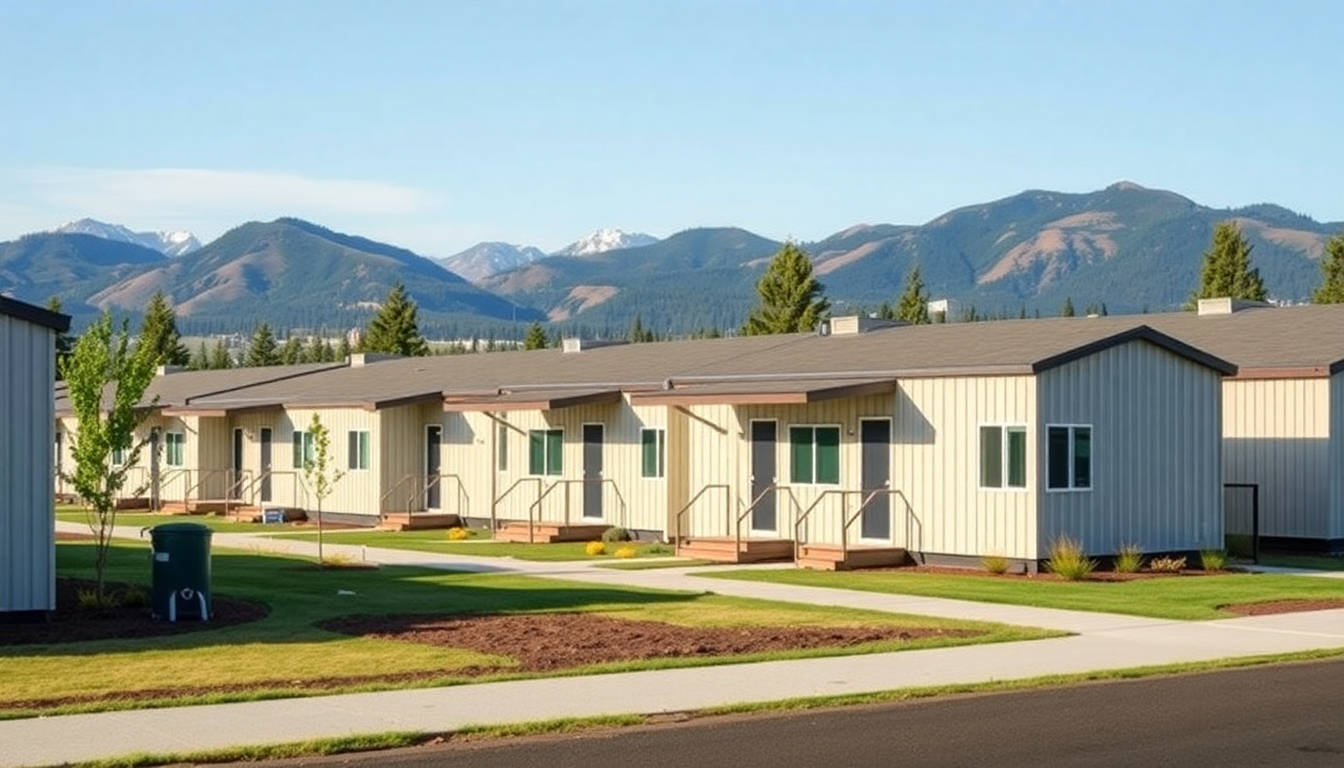
The Juniper Ridge Temporary Safe Stay Area provides managed transitional camping with services and case management. The goal is to connect people with permanent housing through a structured pathway rather than leaving them in unmanaged encampments.
Affordable housing development continues, though not at a pace that matches the need. The city’s affordable housing programs, nonprofit development, and projects like Caldera Ranch with its 254 affordable units are adding supply, but the waiting lists for affordable housing remain long.
Shelter and service expansion through organizations like the Bethlehem Inn, Shepherd’s House, and other providers has increased shelter bed capacity. However, shelter beds provide temporary stability, not permanent housing.
Prevention programs that help people at risk of losing housing, through emergency rental assistance, legal aid for tenants facing eviction, and rapid rehousing programs, address the problem before it starts. Prevention is substantially cheaper than addressing homelessness after it occurs.
What the Trend Means for the Community
Rising homelessness affects everyone in Central Oregon, not just the people directly experiencing it. Impacts include:
Public safety. Unmanaged encampments in wildfire-prone areas create fire risk, as the Mile Marker 132 fire demonstrated. Emergency service calls related to homelessness consume resources that would otherwise be available for other community needs.
Business impacts. Downtown and commercial areas adjacent to encampments experience reduced foot traffic and customer complaints. Business owners bear costs for cleanup and security that cut into already tight margins.
Community cohesion. Homelessness strains the social fabric. Disagreements about how to respond, compassion fatigue, and the visible evidence of people living in crisis can divide communities.
Economic workforce impacts. When workers can’t afford to live in the communities where they work, businesses struggle to hire. This creates a cycle where housing costs reduce the available workforce, which limits business capacity, which constrains the local economy.
What This Means for Housing Policy
The 2025 Point-in-Time count reinforces what housing advocates have been saying for years: the region needs more housing at all price levels, and it needs significantly more housing affordable to households earning below the median income. Every policy tool discussed on this blog, middle housing, ADU expansion, SDC reform, UGB expansion, is part of the answer.
No single policy or program will solve homelessness. But the trajectory is clear: without increased housing production, particularly affordable housing, the numbers will continue to rise. The data isn’t ambiguous.
Getting Involved
If you want to help, start with local organizations that work directly on the issue: Bend-Redmond Habitat for Humanity, Housing Works, the Bethlehem Inn, NeighborImpact, and others. Volunteer, donate, or simply educate yourself about the issue. Attend city council and county commission meetings where housing policy is discussed. The decisions made in those rooms directly affect the numbers in the next Point-in-Time count.
Beyond the Numbers
Point-in-Time data is essential for tracking trends and allocating resources, but it doesn’t capture the human reality behind the numbers. Each of the 2,108 people counted in January 2025 has a story that involves some combination of economic hardship, health challenges, family disruption, or systemic failure. The data provides the scale; the community response provides the solution.
Central Oregon has a strong network of service providers, a growing commitment from local government, and a community that cares about its members. What’s been missing is the scale of investment needed to match the scale of the problem. The 2025 Point-in-Time count makes the case for that investment in language that budgets and policy documents understand: numbers that are going up, not down.
For ongoing data on how housing costs and availability affect Central Oregon, visit our housing market section.