




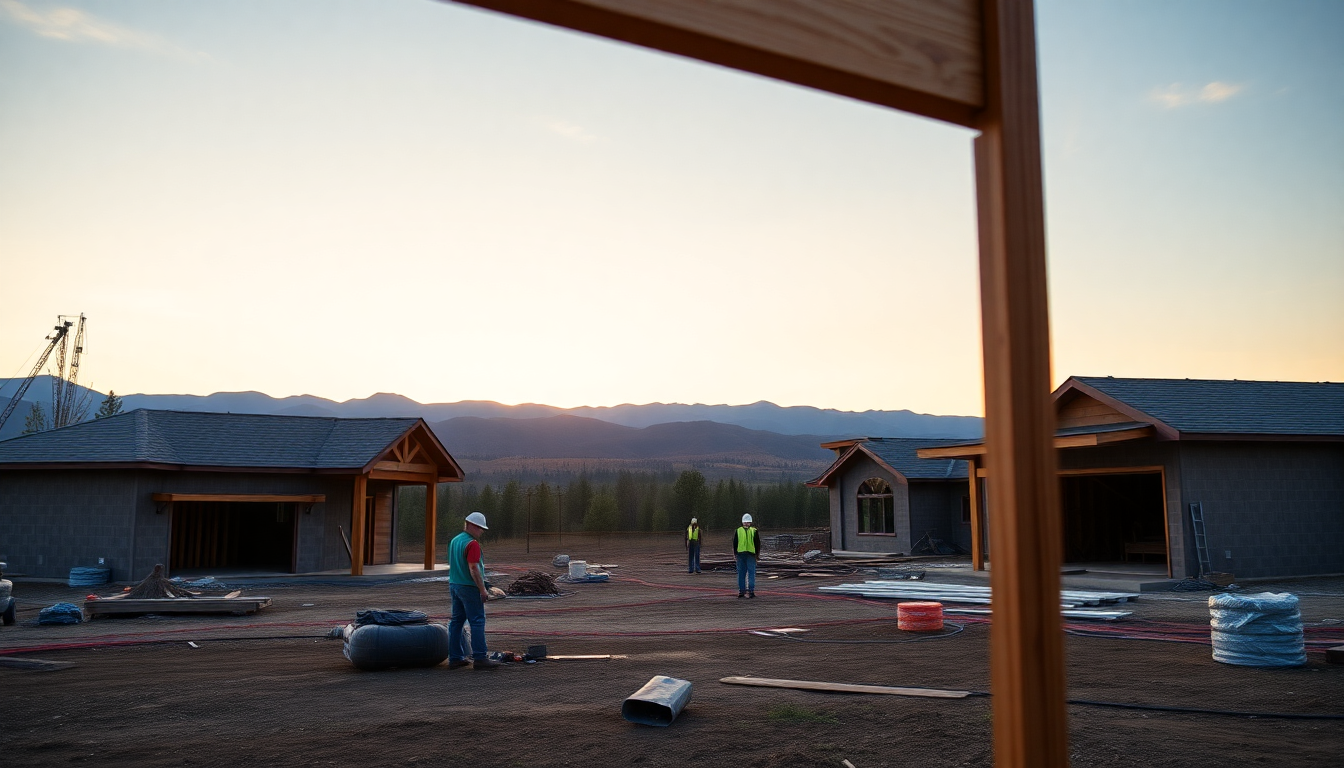
If you’ve gotten a quote to build a home in Central Oregon recently, you’ve encountered the number: approximately $300 per square foot, all in. That’s roughly double what the same construction cost in 2019. The increase feels dramatic because it is dramatic. A 2,000-square-foot home that would have cost around $300,000 to build five years ago now costs around $600,000 before you add the cost of land. Understanding what’s driving that increase and whether it’s likely to come back down is essential for anyone considering new construction, a major renovation, or the increasingly relevant question of whether to build or buy.
What Goes Into $300 Per Square Foot
The $300 figure represents the total development cost per square foot, not just the hammers-and-nails construction cost. It includes several major categories:
Hard Costs (Materials and Labor)
This is the actual construction: foundation, framing, roofing, siding, plumbing, electrical, HVAC, insulation, drywall, flooring, cabinetry, fixtures, and finish work. Hard costs typically represent 60% to 70% of total development costs. In Central Oregon, labor costs have risen significantly due to workforce shortages. Skilled trades workers, particularly framers, electricians, and plumbers, are in high demand and commanding higher wages.
Material costs spiked dramatically during and after the pandemic, with lumber reaching historic highs in 2021. While lumber prices have retreated from those peaks, they haven’t returned to pre-2020 levels. Other materials, including concrete, steel, copper, and manufactured products like windows and appliances, have also seen sustained price increases.
Soft Costs
Architecture, engineering, surveying, permitting fees, insurance during construction, financing costs, and project management typically add 15% to 25% to the project budget. These costs have increased as professional service rates have risen and as projects have become more complex due to updated building codes, including upcoming wildfire-resistant building requirements.
System Development Charges
SDCs in Bend range from $25,000 to $50,000 per unit depending on size, type, and the specific infrastructure categories that apply. The recent tiered SDC reform has lowered this for smaller homes but the fees remain a significant line item in any development budget.
Permitting Timeline Costs
With building permit processing taking up to 17 weeks in Deschutes County, the carrying costs during the permitting period, land loan interest, property taxes, insurance, add to the total. Every month that money is tied up in a project before construction begins is a month of cost with no progress.
Why Costs Doubled Since 2019
The doubling of construction costs since 2019 isn’t attributable to any single factor. It’s the compounding effect of several simultaneous pressures:
Material cost inflation. Supply chain disruptions, increased demand, tariffs on imported materials, and energy cost increases have all pushed material costs upward. While the most extreme spikes have moderated, the baseline has permanently shifted higher.
Labor shortage. Central Oregon’s construction workforce hasn’t grown as fast as the demand for construction. Retirement of experienced workers, insufficient trade school enrollment, and competition from other regions and industries have all contributed. When labor is scarce, wages rise, and those increases flow directly into construction costs.
Regulatory complexity. Updated building codes, energy efficiency requirements, and incoming wildfire-resistant construction standards all add material and labor costs. Each individual requirement may add only 1% to 3%, but the cumulative effect of multiple code updates is significant. The wildfire codes alone are expected to add approximately 3% to new construction costs.
Land costs within the UGB. As demand for housing has pushed against the finite supply of buildable land within the Urban Growth Boundary, land prices have increased. Higher land costs per lot raise the effective per-square-foot cost of the finished home.
The Impact on Affordability
Here’s the fundamental tension: at $300 per square foot, even a modest 1,500-square-foot home costs $450,000 to build before adding land costs. Add $80,000 to $150,000 for a lot in Bend, and the total is $530,000 to $600,000 for what most people would consider a basic, functional home. That price point is unaffordable for many working households in Central Oregon without significant down payment assistance or below-market financing.
This cost reality is why “affordable” new construction is nearly impossible without subsidies. When your cost floor is $300 per square foot, you can’t build your way to a $350,000 home on a market-rate lot with market-rate financing. The math requires intervention, whether through reduced land costs (donated or discounted land), reduced SDCs (fee waivers), reduced construction costs (volunteer labor, as with Habitat for Humanity projects), or external funding (tax credits, grants).
Build vs. Buy
For households deciding between building new and buying existing, the cost comparison has shifted significantly:
Building new at $300+ per square foot gives you a home designed to your specifications, built to current codes, with modern energy efficiency and (after April 2026) wildfire-resistant features. You control the layout, finishes, and systems. But you’ll pay a premium over comparable existing homes, and the timeline from design to move-in is 14 to 23 months.
Buying existing typically offers more square footage for the same price, an established neighborhood with mature landscaping, and a much faster move-in timeline. You may need to renovate or update, which comes with its own costs, but the baseline per-square-foot cost is usually lower than new construction. Browse current listings to compare what’s available at various price points.
The right choice depends on your priorities, timeline, and budget. There’s no universally correct answer. What has changed is that building new is no longer the obvious financial choice it might have been when construction costs were significantly lower.
Will Costs Come Down
The honest assessment: probably not significantly. Some of the pandemic-era spikes were temporary, but the structural factors, labor costs, energy costs, regulatory requirements, land costs, have settled into a new baseline. Construction costs may stabilize, and efficiency improvements may slow the rate of increase, but expecting a return to $150 per square foot is not realistic.
Incremental improvements are possible. Modular and prefabricated construction methods can reduce labor costs and timelines. Tiered SDCs reduce fees for smaller homes. Streamlined permitting could reduce carrying costs. But none of these individually or collectively will cut costs in half.
What This Means for You
Whether you’re building, buying, or renovating, accurate cost expectations are essential. Get multiple bids. Build relationships with reputable builders who have verifiable track records in Central Oregon. Budget for contingencies, a 10% to 15% buffer above your base estimate is prudent. And factor in the full timeline, including permitting, into your financial planning.
Our team works with buyers navigating both new construction and existing home purchases. We can help you run the numbers and make an informed decision based on current market conditions rather than assumptions that may no longer hold.