




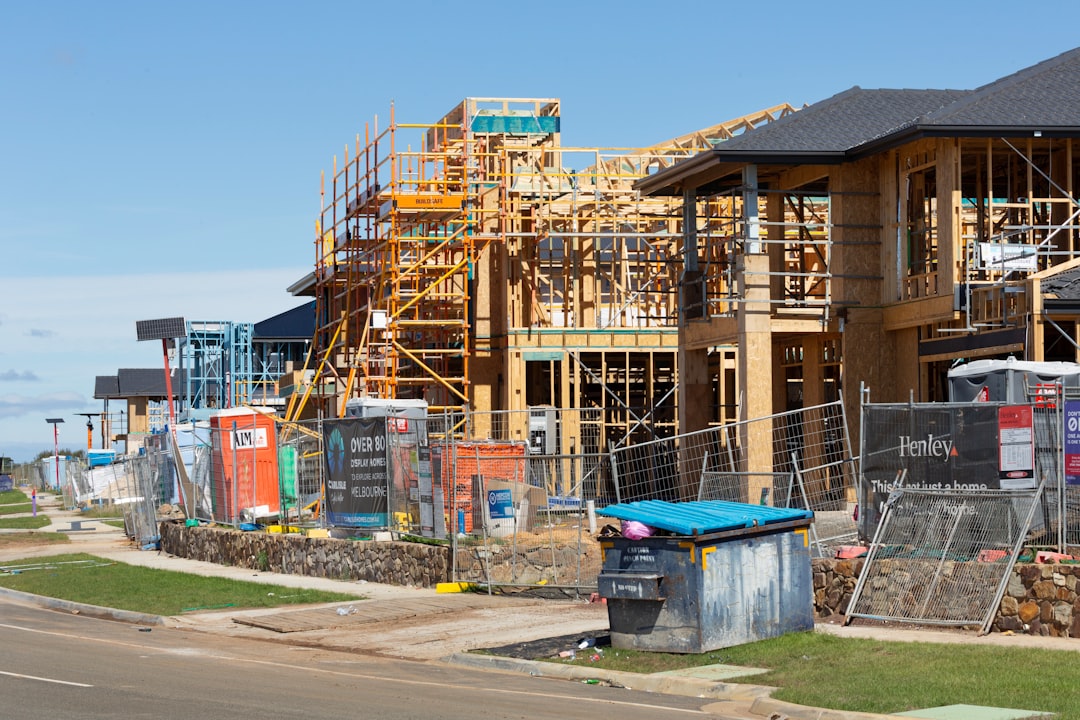
New construction in Central Oregon has been steadily expanding as builders respond to population growth and housing demand. Whether you’re considering a production home in a new subdivision, a semi-custom build, or a fully custom home on your own lot, this guide covers what to expect, what it costs, and how to navigate the process in Bend, Redmond, and the surrounding communities.
Active Builders in Central Oregon
The Central Oregon building landscape includes national production builders, regional firms, and custom builders. Each serves a different market segment:
Production builders construct homes from a set catalog of floor plans, sometimes with limited customization options. They benefit from economies of scale and typically offer the lowest per-square-foot pricing. Active production builders in Central Oregon include Hayden Homes (the largest regional builder, active in Bend and Redmond), Pahlisch Homes, and several others developing in planned communities.
Semi-custom builders offer a middle ground. They may start with a base plan but allow meaningful modifications to layout, finishes, and features. Companies like Iron Horse Custom Builders, Monolith Construction, and several mid-size firms operate in this space. Pricing is 10% to 30% above production builders, but you get more control over the final product.
Custom builders build from architectural plans (often created by the homeowner’s architect) on the homeowner’s lot. This is the most expensive option per square foot but gives you complete control over design, materials, and siting. Central Oregon has dozens of custom builders, ranging from small owner-operated firms to larger companies that specialize in high-end custom homes. Due diligence on the builder’s track record, financial stability, and warranty practices is essential.
Custom vs Production: Making the Right Choice
The decision between custom and production depends on your priorities, budget, and timeline:
Choose production if:
- You want a predictable price and faster timeline
- The available floor plans meet your needs reasonably well
- You’re comfortable with standard finishes that you can upgrade over time
- Budget certainty matters more than customization
- You want a home in a specific new development with infrastructure already in place
Choose custom if:
- You have specific design requirements that no production plan meets
- You own or plan to purchase a specific lot with unique characteristics (views, slope, orientation)
- You want to choose every material, fixture, and detail
- You have a larger budget and can absorb cost variations
- You’re willing to invest the time in a longer process
A practical middle path: many buyers start looking at new construction, find that production builders don’t offer exactly what they want, but discover that a semi-custom builder can modify an existing plan to hit 90% of their wish list at a price between production and full custom.
Timeline Expectations
Build timelines in Central Oregon have improved from the extreme delays seen during 2021 and 2022 (when material shortages pushed timelines to 18+ months), but they’re still longer than pre-pandemic norms.
- Production home: 6 to 10 months from contract to completion if the lot is already prepared and permits are issued. Some builders have spec homes (already under construction or completed) available for faster occupancy.
- Semi-custom home: 10 to 14 months from design finalization to completion. Add 2 to 4 months for the design and permitting phase.
- Custom home: 12 to 18 months from breaking ground to completion, with 3 to 6 months of design and permitting before that. Total timeline from first meeting with an architect to moving in can be 18 to 24 months.
Factors that extend timelines in Central Oregon include winter weather (concrete work and framing slow down from December through February), permitting backlogs (particularly in Bend city limits), and sub-contractor availability during peak building season (April through October).
Lot Availability
Finding a buildable lot in Central Oregon requires understanding the development landscape:
In-city lots (Bend): Scarce and expensive. Buildable lots within Bend city limits typically range from $150,000 to $400,000 depending on location, size, and views. The city’s Urban Growth Boundary (UGB) limits outward expansion, which constrains lot supply. Recent UGB expansions have opened some new areas, but development takes years.
In-city lots (Redmond): More available and more affordable, typically $80,000 to $200,000. Redmond’s UGB has been more accommodating of growth, and several new subdivisions are in active development.
County lots (unincorporated Deschutes, Crook, Jefferson): Rural lots range from $50,000 to $250,000+ depending on size, location, access, and utilities. Properties without existing water, sewer, or power connections will require significant additional investment to develop.
Resort community lots: Available in some phases of Caldera Springs, Eagle Crest, and other resort developments. Prices reflect the resort amenity access and typically range from $100,000 to $500,000+.
When evaluating a lot, beyond price, consider utility access (connecting to water, sewer, power, and internet if not already present can cost $20,000 to $100,000+), topography (sloped lots cost more to build on), soil conditions (some areas require engineered foundations), and fire risk (WUI designation affects building requirements and insurance costs).
Permitting Process
Permitting timelines and requirements vary by jurisdiction, which is an important consideration when choosing where to build.
Bend
Bend’s Community Development Department handles building permits. The process typically takes 4 to 8 weeks for residential permits, though complex projects or projects requiring design review can take longer. Bend has specific requirements for energy efficiency, stormwater management, and fire-resistant construction within the WUI.
System Development Charges (SDCs) in Bend are significant: transportation, water, sewer, parks, and stormwater SDCs for a new single-family home total approximately $25,000 to $35,000. These fees are paid at permit issuance and are often overlooked in budget planning.
Deschutes County
Properties outside city limits go through Deschutes County’s Community Development Department. County permits can be faster than Bend for straightforward projects, but properties in sensitive areas (wetlands, floodplains, wildlife overlay zones) may require additional review.
County properties not on municipal water and sewer systems require well and septic permits, which add time and cost to the process. Soil testing for septic suitability is essential before purchasing a rural lot, as some sites have soil conditions that prevent standard septic systems.
Cost Per Square Foot Ranges
Building costs in Central Oregon as of late 2025:
- Production builder (basic finishes): $200 to $275 per square foot
- Semi-custom (mid-range finishes): $275 to $375 per square foot
- Custom (higher-end finishes): $350 to $550 per square foot
- High-end custom (premium everything): $500 to $800+ per square foot
These ranges include the structure, standard site preparation, and builder markup, but typically exclude the lot cost, SDCs, utility connections, landscaping, driveway, and soft costs (architecture, engineering, permits). A realistic “all-in” budget for a 2,000 square foot semi-custom home on a purchased lot in Bend might look like:
- Lot: $200,000
- Construction (at $325/sqft): $650,000
- SDCs and permits: $35,000
- Utility connections: $10,000
- Architecture and engineering: $25,000
- Landscaping: $20,000
- Contingency (10%): $65,000
- Total: approximately $1,005,000
That same home might cost $750,000 to $800,000 in Redmond or La Pine, primarily due to lower lot costs, lower SDCs, and slightly lower construction costs.
Common Upgrades That Matter
When building or buying new construction, you’ll face a long menu of upgrade options. In Central Oregon, these upgrades tend to add the most long-term value and daily livability:
- Insulation and windows: Upgrading from code-minimum insulation to higher R-values and from standard double-pane to high-performance windows pays back quickly in Central Oregon’s cold winters. The comfort difference is noticeable.
- Heating system: Heat pump systems (especially cold-climate heat pumps) are increasingly popular and offer both heating and cooling. Given Central Oregon’s 100-degree summers and single-digit winters, this matters.
- Garage space: Central Oregon buyers value garage and shop space more than most markets. If the standard plan includes a 2-car garage, upgrading to 3-car or adding a separate shop space is almost always worth the investment.
- Outdoor living: Covered patios, decks, and built-in outdoor features get heavy use here. The high desert climate offers 300+ days of sunshine, making outdoor living spaces genuinely functional most of the year.
- Electrical pre-wiring: Pre-wiring for future EV charging, solar panels, and home automation is much cheaper during construction than retrofitting later.
Upgrades that typically don’t add proportional value: ultra-premium countertops beyond quartz (marble, exotic stone), high-end fixtures in secondary bathrooms, custom millwork in rooms that don’t get daily use, and technology systems that become outdated quickly.
Energy Efficiency Requirements
Oregon’s energy code is among the more stringent in the country, and Central Oregon’s climate zone (Zone 5) adds additional requirements. New homes must meet minimum standards for insulation, air sealing, window performance, and mechanical system efficiency.
Many builders exceed code minimums, and several offer energy-efficiency packages that include:
- Enhanced insulation (R-38 to R-49 walls and R-60 ceilings vs code minimum)
- Triple-pane windows
- Heat recovery ventilation (HRV) systems
- Solar-ready wiring and structural reinforcement
- Electric vehicle charging infrastructure
Earth Advantage and Energy Star certifications are available for homes that exceed code by specific margins. These certifications can add resale value and may qualify for utility rebates or tax incentives.
Builder Warranties
Oregon law requires builders to provide a one-year warranty on workmanship and materials and a 10-year warranty on structural defects. Many builders offer more comprehensive warranties:
- 1 year: Workmanship and materials. The builder fixes defects in construction quality.
- 2 years: Systems (plumbing, electrical, HVAC, mechanical). The builder repairs or replaces defective systems.
- 10 years: Structural. Covers major structural defects (foundation, load-bearing walls, roof structure).
Some builders also offer or require enrollment in third-party warranty programs (like 2-10 Home Warranty or StrucSure), which provide an independent claims process. Understand the warranty structure before signing a contract, and document any issues that arise during the warranty period promptly.
New Construction vs Resale
How does building or buying new compare to purchasing an existing home?
Advantages of new construction:
- Everything is new: no deferred maintenance, no hidden problems, modern systems
- Energy efficiency: new homes are significantly more efficient than older ones, which matters in Central Oregon’s climate
- Customization: choose your layout, finishes, and features
- Builder warranty: coverage against defects
- Modern building codes: safer, more resilient, more fire-resistant
Advantages of resale:
- Established neighborhoods with mature landscaping
- Known neighborhood character (you can see and meet the neighbors before buying)
- Often better locations (new construction tends to be on the edges of town)
- Immediate occupancy (no waiting 6 to 18 months)
- Typically lower cost per square foot for equivalent locations
- Character and craftsmanship in older homes that production builders don’t replicate
Neighborhoods with Active Development
Current areas with significant new construction activity in Central Oregon include:
- Bend Southeast: Several large subdivisions between Highway 97 and Knott Road, offering production and semi-custom options in the $500,000 to $800,000 range
- Bend Northeast: Development around Hamby Road and Empire Boulevard corridors
- Redmond: Multiple active subdivisions on the west and north sides of town, often the most affordable new construction in the region
- Sisters: Limited but ongoing development, primarily semi-custom and custom homes
- La Pine: Growing new construction activity, often the lowest entry point for new homes in Deschutes County
Browse current new construction listings and available resale homes on our search page. Our team can help you evaluate whether building or buying makes more sense for your specific situation, and we work with local builders across the price spectrum. For current market conditions, check our market reports.